

In a vast and diverse city like Los Angeles, ensuring that the voices of local communities reach the administration is no easy task. This is where the Wilshire Center–Koreatown Neighborhood Council (WCKNC) plays a crucial role. This council acts as an advisory body within the Los Angeles City Government, primarily representing the residents, workers, property owners, and community stakeholders of the area. It conveys local perspectives on issues such as development plans, homelessness, and community beautification to the city administration. Its functioning is based on the principles of transparency, public participation, and strict administrative accountability.
Transparency and Public Access: Open Dialogue, Open Process
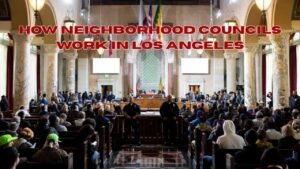
The greatest strength of the WCKNC lies in its openness. The council holds regular and special board meetings where community issues are discussed. These meetings are often held in public spaces such as the Pio Pico Library or conducted via virtual platforms to ensure maximum participation. This ensures that decisions are not made behind closed doors, but in the presence of the community.
These meetings are conducted in accordance with California’s Ralph M. Brown Act, a law that mandates transparency in government meetings. This law requires that the agenda be made public before the meeting, that people have the right to attend and speak, and that the discussion process is transparent. This means that any citizen can know what issues will be discussed, when, and how.
Furthermore, the agendas, minutes, and supporting documents related to the council meetings are made available online. This system not only provides citizens with information but also gives them the opportunity to understand and monitor the decision-making process. Meetings also include a Public Comment period, where each speaker is typically given approximately two minutes. This time limit helps keep discussions balanced and efficient, allowing more people to share their perspectives.
Accountability and Governance: Operating within the Rules
WCKNC is not just an advisory group; it also manages both public funds and public trust. Its budget comes from taxpayer money and is administered through the Neighborhood Council Funding Program. All expenditures are reviewed before approval to ensure that the money is being used appropriately and in the best interest of the community. This financial oversight makes the Council accountable and minimizes the potential for unnecessary or inappropriate spending.
The Council’s board is composed of elected volunteers, known as “stakeholders.” These members represent the community and are required to adhere to established Bylaws. These bylaws ensure fair representation, proper conduct, and an orderly decision-making process.
Avoiding conflicts of interest is also a crucial part of the Council’s operation. Board members are expected to prioritize the community’s interests above personal gain. They follow the city’s ethics guidelines, ensuring that decisions remain impartial and trustworthy.
In addition, the Council must comply with laws such as the California Public Records Act. This means that many of the Council’s official records are available for public inspection. This rule further strengthens transparency and builds public confidence in the administrative process.
Stakeholder Participation: Every Voice Matters

WCKNC’s structure is built on the principle that every segment of the community should be represented. The definition of a “stakeholder” is broad—it includes those who live, work, own property, or have a vested interest in the area. This inclusive approach makes the Council a platform for diverse voices.
The Council actively encourages civic participation. It is believed that better decisions can be made when people from diverse backgrounds, cultures, and experiences are involved in the discussion. Through community meetings, information sharing, and open dialogue, the Council engages local residents and gives them the opportunity to be part of the decision-making process.
The Council uses official channels for communication. The aim is to ensure that information reaches the public accurately, reliably, and in an organized manner. Maintaining a distinction between the private opinions of individual board members and the official stance of the Council is also part of this system, preventing confusion.
A Bridge Between the Community and the Administration
The true significance of WCKNC lies in its role as a bridge between the community and the city administration. It is neither entirely a government department nor simply a social group, but rather an active medium for dialogue between the two. Providing local perspectives on development plans, discussing issues related to homelessness, and suggesting ways to improve the neighborhood—all these roles make it an example of grassroots democratic participation.
Conclusion: Local DemocracyA Living Example
The Wilshire Center–Koreatown Neighborhood Council demonstrates that when transparency, accountability, and community participation come together, local governance becomes more effective and trustworthy. Open forums, clear rules, financial oversight, and ethical conduct—all these elements combine to make the WCKNC an institution that empowers citizens to be not just spectators, but active participants.
Such councils serve as a reminder that democracy is not limited to elections; it is a continuous process of daily dialogue, collective decision-making, and working together for the betterment of the community.
